
Meet the Griffins
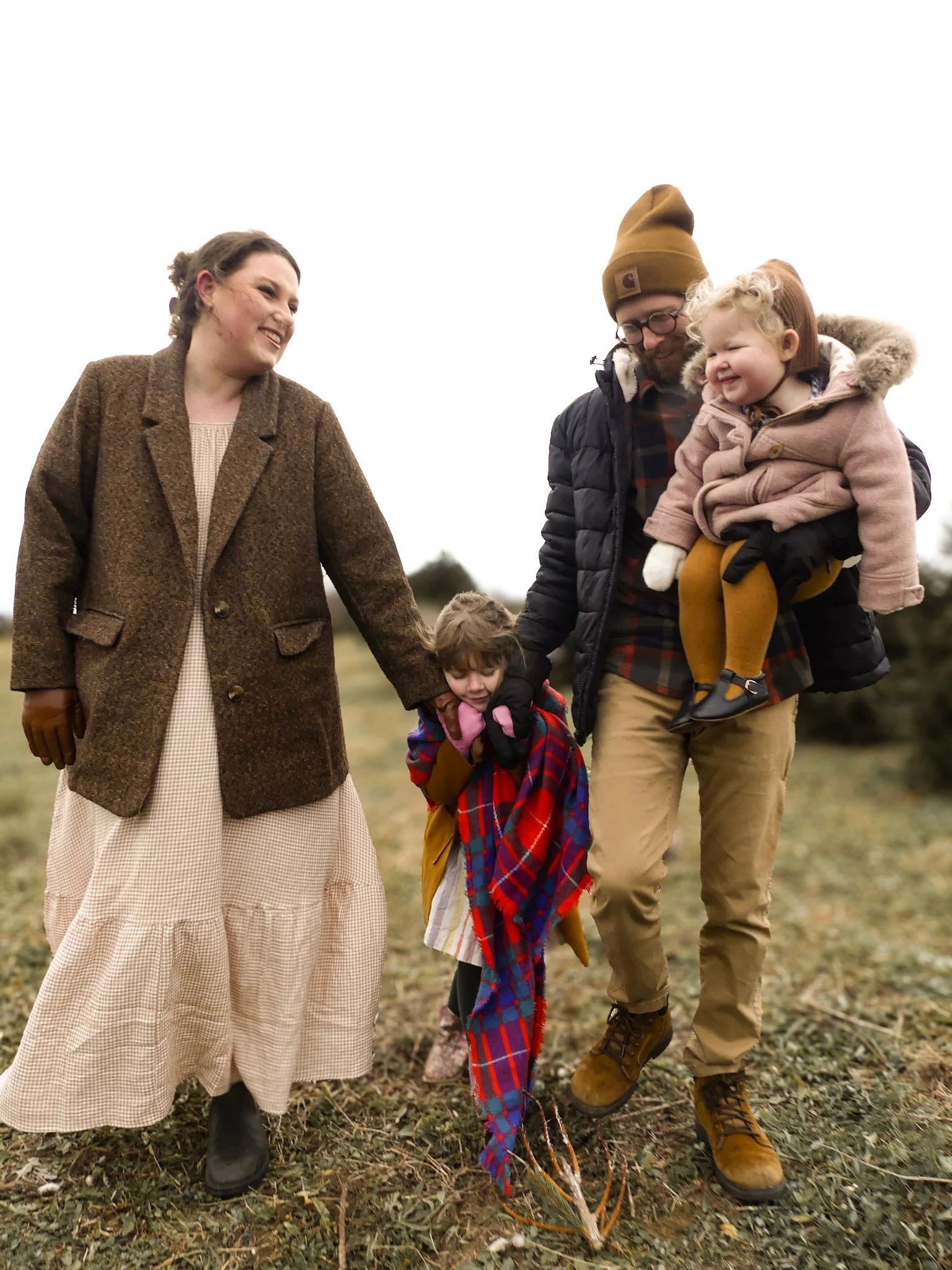
Hello! Our names are Baylor and Charity Griffin. We have two daughters, and know first hand the joys and challenges that come with finding resources to help us raise our children in the nurture and admonition of the Lord. We’ve discovered over the years, that some of the most helpful resources we have found are centuries old, and we just hadn’t heard of them. In 2025, God led us to create New Catechist Press to share these time tested resources with others in a new and refreshing way. Our goal is to provide helpful resources that are Biblically rich, grounded in our time tested Christian history, and yet, enjoyable for the every day family. Thank you for joining us on this journey, and it is our prayer that you find us to be a blessing to you and your family.
Why the name “Catechist?”
The word “catechize” comes from the Greek word “katecheo” (Luke 1:4), which means to “teach” or “instruct”. Over the centuries, the word catechism became associated with a particular method of teaching children and new believers alike. This method involved memorizing a series of questions and answers. For example, the first children’s catechism we used with our oldest daughter begins like this:
Question 1: Who made you?
Answer: God!
Question 2: What else did God make?
Answer: Everything!
Question 3: Why did God make everything?
Answer: For His glory!
While this method of catechism has fallen out of favor in American Protestant circles over the last 100 years, Roman Catholics have maintained the practice, leading most to think of Catechism as a Catholic thing. But it is actually deeply Protestant, the Reformation being something of a revival in catechism at the time. For example, the famous Baptist minister Charles Spurgeon once compiled a catechism for his own congregation and in the introduction he said, “I am persuaded that the use of a good Catechism in all our families will be a great safeguard against the increasing errors of the times.”
While we find value in the formal method of question and answer catechism, we do not see it as the magic method that will solve everything a parent faces in the discipleship of their children. It is simply a tool that has a centuries long, proven track record, and for this reason, we believe it can be useful and trusted.
At the same time, we use the word “catechism” in a more broad sense. A formal catechism is not the only way to catechize. The truth is that we all have been catechized; we have been “taught” how to think, how to live, and how to view the world. Even the makers of modern media understand this, using avenues like film and music to teach (catechize) young people to have a particular view of the world.
That’s why we have created resources like our “CateKids Scripture Songs” that can help parents disciple their kids in the faith. When it comes to these resources, we use “catechize” in much the same way as the verb “disciple.” Our heart with these resources is for them to be enjoyable and for the whole family to grow in love for God and His Word.
What We Believe
Scripture
We believe the Bible to be the only inerrant Word of God. It is our only ultimate and infallible authority for faith and practice.
God
We believe God is a Spirit, infinite, eternal, and unchangeable in his being, wisdom, power, holiness, justice, goodness, and truth, who is the Creator, Sustainer, and Governor of everything that has been made.
We believe there is but one true and living God; that there are three persons in the Godhead: the Father, the Son, and the Holy Ghost; and that these three are one God, the same in substance, equal in power and glory.
Creation
We believe that God made all things of nothing, by the word of His power, in the space of six normal days, and all very good.
Man
We believe man was made by God, in the image of God, male and female, and on the sixth day. Man’s chief end is to glorify God and to enjoy him forever.
The Fall
We believe our first parents, though created in knowledge, righteousness, and holiness, sinned against God, by eating the forbidden fruit, and that their fall brought all mankind into an estate of sin and misery;
We believe God determined, out of His mere good pleasure and grace, to deliver many out of this estate of sin and misery, and to bring them into an estate of salvation by a Redeemer.
The Lord Jesus Christ
We believe man’s only Redeemer is the Lord Jesus Christ, who, being the eternal Son of God, became man, and so was, and continues to be, God and man in two distinct natures, and one person, forever. As our Redeemer, He executes the office of a prophet, of a priest, and of a king.
We believe Christ as our Redeemer underwent the miseries of this life, the wrath of God, the cursed death of the cross, and burial; He rose again from the dead on the third day, ascended up into heaven, sits at the right hand of God, the Father, and is coming again to judge the world at the last day.
Salvation and The Gospel
We believe God requires of us faith in Jesus Christ and the Gospel of His death, burial, and resurrection, to escape the wrath and curse of God due us for our sin, and by which we have redemption, the forgiveness of sins. This salvation is received by grace alone, through faith alone, in Christ alone, to the glory of God alone, outside of which there is no possibility of salvation.
The Church
We believe all those who are united to Jesus Christ in faith by the Holy Spirit are thus gathered together into one Body, the universal Church, with Jesus Christ as their head, and thus have fellowship with Him and with one another, transcending nation, tribe, and tongue. For His Church, Christ has appointed the ordinary means of grace by which the local assemblies of His Church are blessed and strengthened. These means of grace are the reading of the Scriptures, prayer, the ministry of preaching, the singing of psalms, hymns, and spiritual songs, and the two sacraments of believers’ baptism and the Lord’s Supper.
The Last Things
We believe in the bodily return of the Lord Jesus Christ, when He shall resurrect both the saved and lost; those who are saved to the resurrection of life, and those who are lost to the resurrection of damnation.
Particulars
New Catechist Press is a Protestant publisher, rooted in the historic Baptist tradition. For further reading on what historic Baptists believe, we recommend the 1689 London Baptist Confession of Faith and C.H. Spurgeon’s A Puritan Catechism.